Off The Rails
A deep dive into the London Underground

It’s the back end of the nineteen eighties & I have been poached from the Royal Albert Hall by a company called Upfront. Upfront were regularly in & out of the hall, usually rigging rock shows, although I knew that they dabbled in staging as well, so I was fairly familiar with their crew & practises.
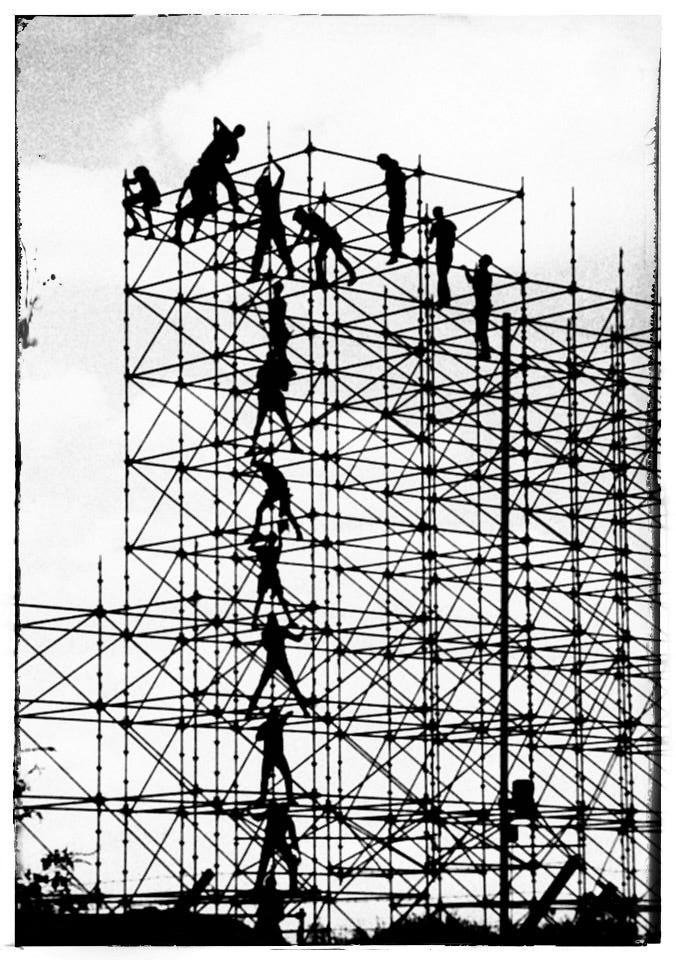
Some context… GKN (Guest Keen & Nettlefolds) were a Birmingham based engineering company then noted for the manufacture of screws, nuts & bolts and scaffolding components. They had a modular steel scaffold system called ‘GKN Kwikform’ that was used as formwork on major construction projects. There were various other systems around servicing the big, outdoor stages that were becoming a ‘thing’. Major bands & supergroups were undertaking huge, international tours requiring stages, roofs and production equipment in cities across the world. Much of the staging in use for music industry staging at the time came out of Belgium or Germany, we would be the first major British contender. The Kwikform system was great for large runs as it went up really quickly, hence it was hated by construction scaffolders as they tended to be paid by the yard, as it were, and we don’t want to be finishing the job too early now, do we?
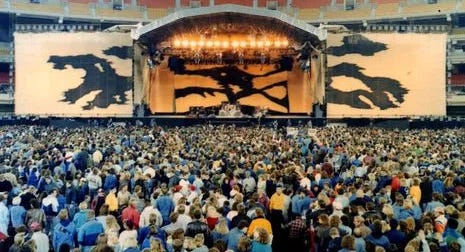
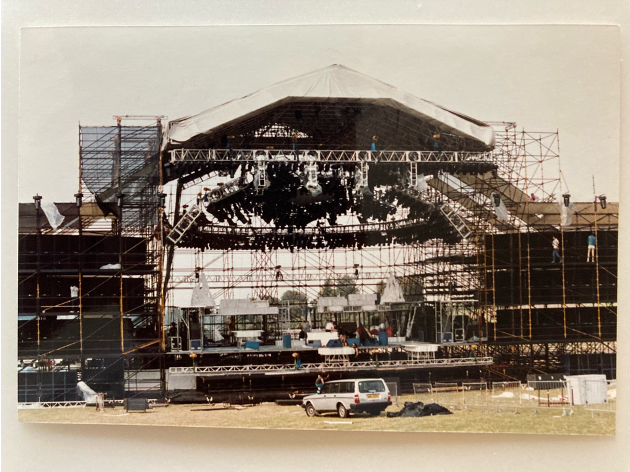
It transpired that Upfront were negotiating with GKN to carry out R&D on the existing Kwikform scaffold system, with a view to using it on a major upcoming European & world tour. U2’s Joshua Tree Tour needed three stage systems, two roofs and two sets of lights & sound to leapfrog across Europe initially, and ultimately, the USA. In the end we had something like 65 trucks of steel, six of aluminium roof (also GKN), eight of PA & six or seven of ‘production’ – lights, back line, set & dressing zig-zagging across the European mainland and the UK.
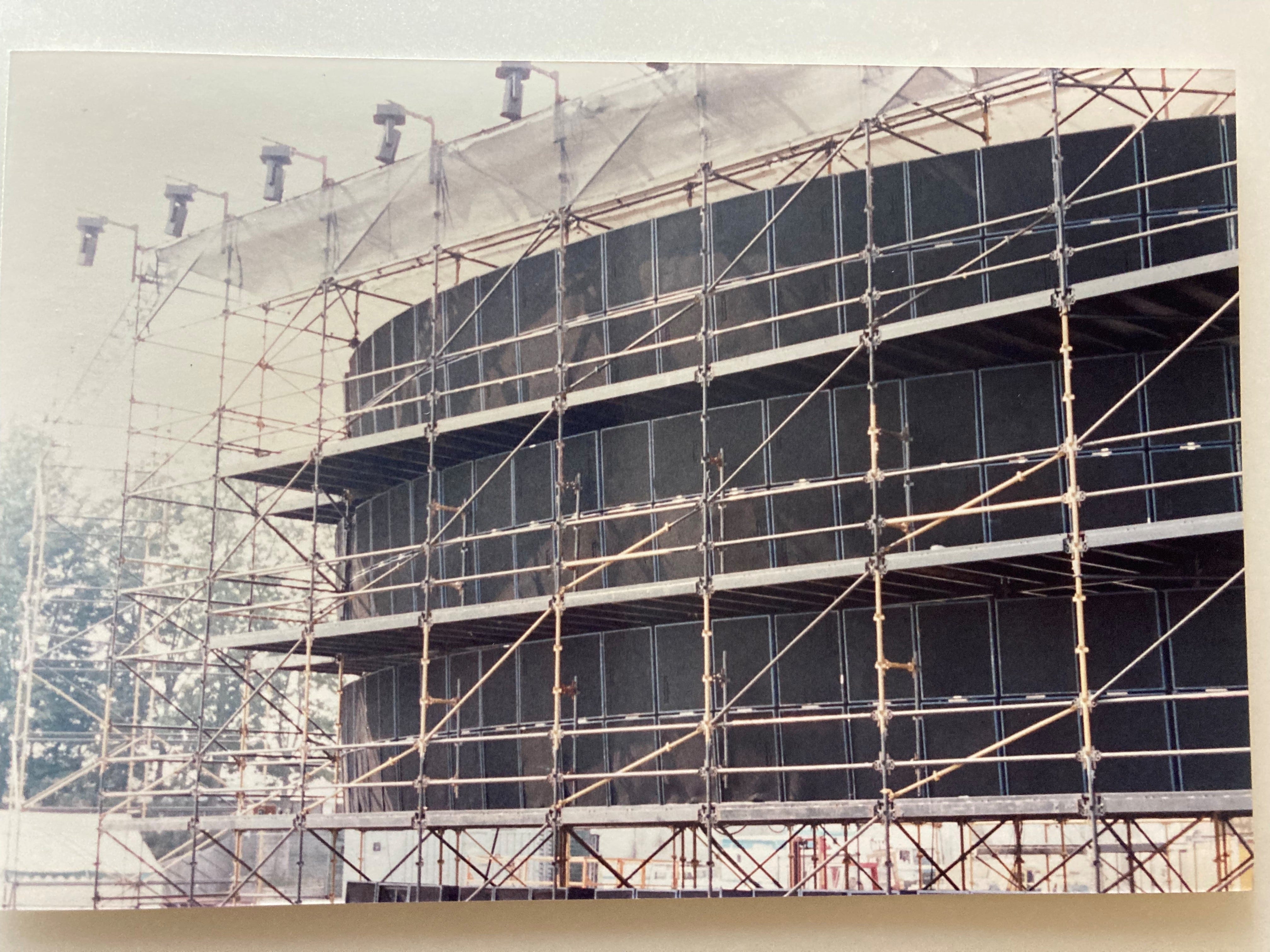
The problem with Kwikform was that, once you got to surface level, you had the tops of the uprights (standards) poking through the deck, in our case, the stage. We needed to find a solution to this that didn’t involve cutting the tops off at every gig. We also needed to beef up the load bearing capacity of some of the components, notably the horizontals, known as the ledgers (across the stage) & transoms (up & down stage). Basically we were trying to get the whole system up to a load capacity of 7.5kN/square metre.
Also worth noting is that Kwikform came in yellow & we needed rock’n’roll black. Consequently, along with several thousand tons of steel, we also acquired a very industrial paint plant!
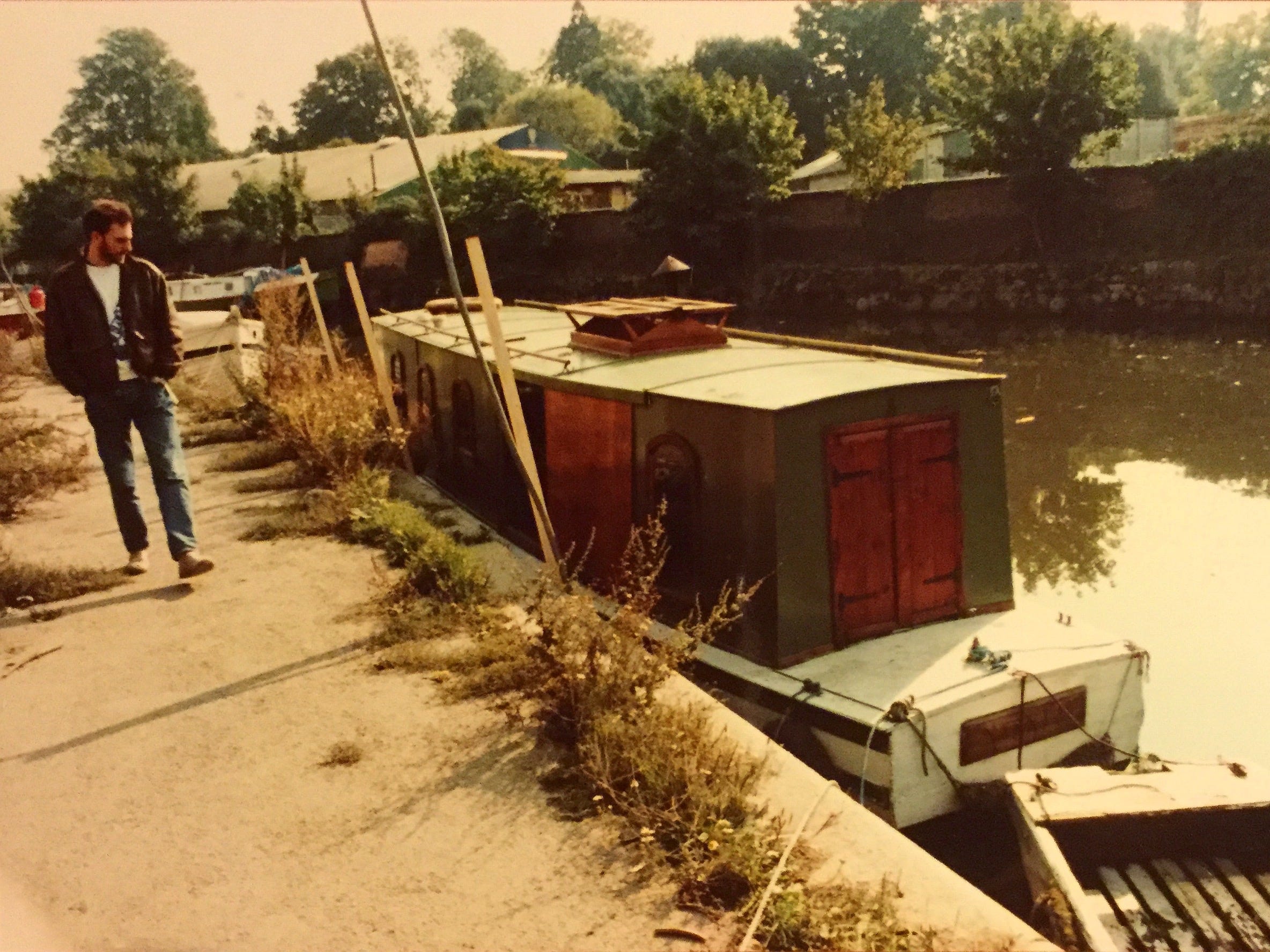
At the time, I was living on a boat in Brentford, West London & Upfront’s offices, warehouse & yard were in Greenwich, South East London, weirdly on the very patch of highly poisoned land that would later house The Millennium Dome, now The O2.
I duly took up my post as ‘Operations Manager’ and commuted, daily across London, first in a Saab 900 complete with little black spoiler, how I loved that car, and latterly in a Volvo GLT Estate that was put so far through its paces that it met itself coming back.
While others started work on the GKN project, I set up an efficient hire and supply operation, renting out electric chain hoists & control, rigging equipment, truss and crew to service it all. We were good, got lots of interesting work including many pop videos. This was peak MTV so we were run ragged providing drapes & rigging to film studios all over London and on locations throughout the Home Counties. We ‘did’ some of the really big acts including Wham, Eurythmics, Big Country, Robert Palmer…
One morning I took a call from an agency who said that they had an engineering project that was going to take some skill, innovation and creativity, would we be able to come to a meeting in Soho? Of course we would, as any fule kno, meetings in Soho mean free tea & coffee, and a better class of biscuit than is found in yer average London SE10 rigging company’s office.
The job was to hang the very first advertising/information screens over the tracks on the London Underground, in this case, the Westbound Piccadilly Line at Leicester Square Station.
The task would entail designing and fabricating frames to hold the screens over the tracks, the screens being good, old fashioned CRT monitors as we weren’t yet using flatscreen technology, and then hanging them over the tracks for the benefit of the commuting populace. The operations department of London Underground were going to take some convincing.
First things first, a recce.
It was at this point that we discovered that the Westbound Piccadilly Line at Leicester Square Station is one of the oldest & deepest platforms on the network. Proper Victorian stuff only accessed via the monstrously long escalators used by the public.
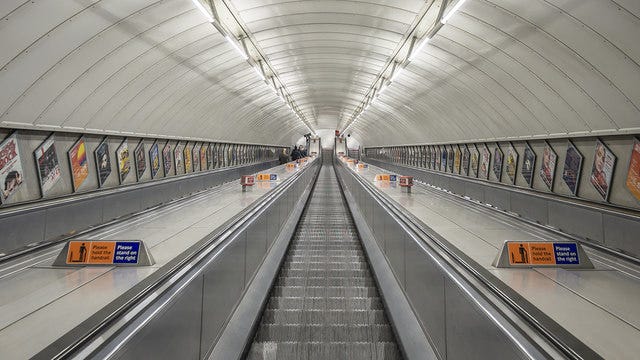
We’d be working at night, which at that time meant between 23:00 & around 05:00 each shift. We’d have to ship our gear in for every shift, no storage down there, and we’d have to negotiate it all down & up the escalators every time.
It didn’t take long to work out that, if we were lucky, we’d probably have not much more than four, maybe five at most, hours actual working time on the tracks, therefore we were looking at something like a dozen night shifts to complete the installation.
The weeks subsequent to the initial approach were spent designing frames, getting hold of the screens, inviting endless suits from London Underground to Greenwich to look, comment, destruction test and reject prototype after prototype until, some four months on, we managed to come up with a frame that met with the dozens of approvals needed.
It was an ‘orrible confection of steel scaffold tubes & proprietary ‘Kee-Klamp’ fittings. Nowdays you’d weld up a super sexy frame that snuggly encapsulated the screen & weighed no more than a few kilos. We weren’t in nowdays.
Now to hang the buggers…
Leicester Square Station opened in 1906 and, when the escalators were put in in 1935, they were the longest in the world at 54m. They remained the longest on the underground network right up until 1992 when they were pipped by a mere 6m at the rebuilt Angel Station.
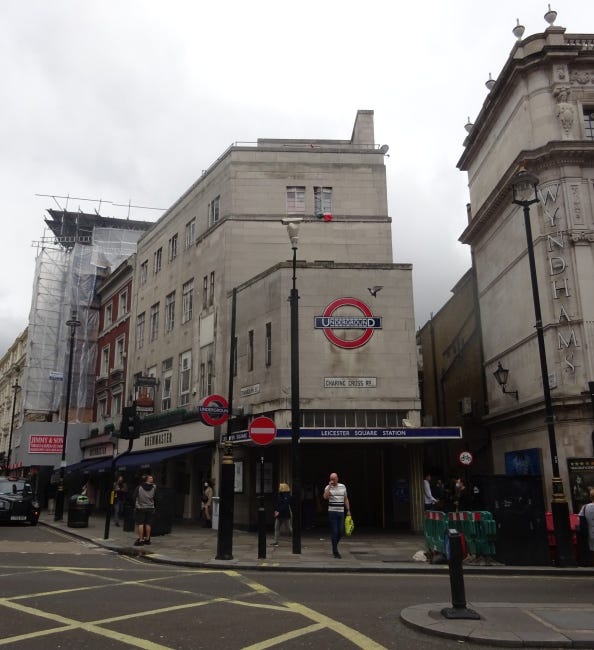
Of course, when we arrived on night one to start work, they were switched off so we had to manhandle our access towers & tools down to platform level and back up again at the end of the shift. We did manage to get them back on for subsequent nights having forcefully pointed out that nigh on two hours of our very limited working time was spent simply getting kit on & off site, and part of that time was spent fighting off the police, who were unreasonably territorial about parking on their patch of WC2, even in the middle of the night.
Working on railway lines is scary, no two ways about it, especially lines that carry around 650v DC at an amperage that is variously described by LUL staff as ‘lots’ or ‘more than enough’. One day we’ll talk about Eurotunnel.
Rule #1, never pee on a train track.
The engineers assigned to us were just great, they knew that we were rookies when it came to railways and that we were, to say the least, nervous about erecting metal access towers on the tracks.
They had all sorts of tell-tales that they put on the live rails to demonstrate that they were in fact, dead rails, and they re-assured us that the rumblings & hootings that could be heard all night weren’t trains about to hurtle through our platform, but were maintenance trains running around the system in adjacent tunnels. There was also the world famous Post Office network that was still operational at the time & which had miniature tube trains thundering about in tunnels near us.
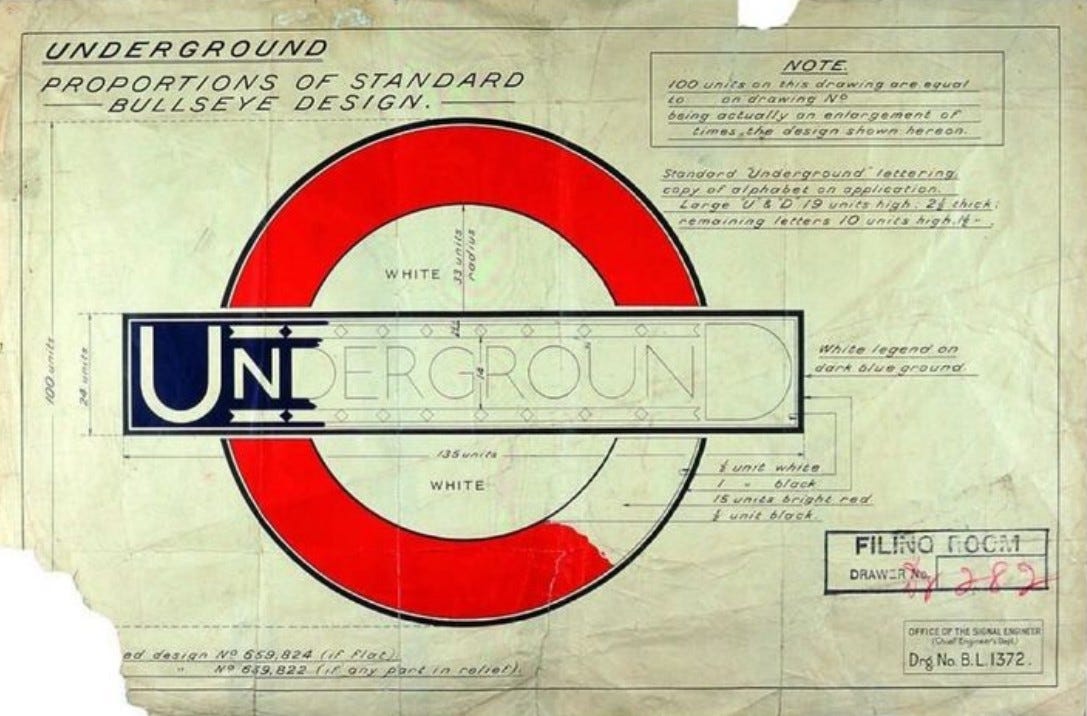
We had facsimiles of the original construction plans which were, in their own right, works of art, how I wish I had kept one, it’d be framed on my wall now.
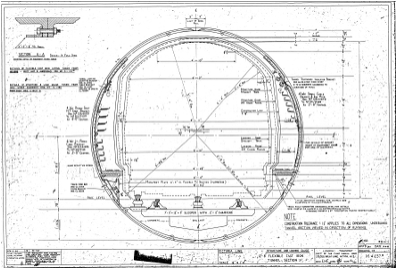
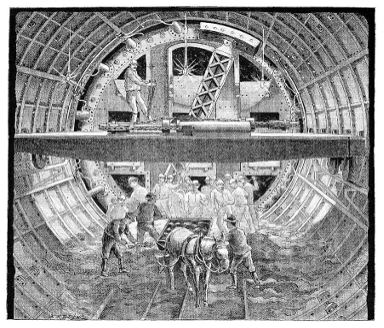
The construction of a tube tunnel is a very elegant piece of engineering, it’s a system of curved, interlocking fish plates bolted together to form a perfect circle big enough to drive a train through.
Having identified the exact location for the first bracket, our plan was to remove a couple of tiles, strip off enough cladding to reveal the metalwork and hang our frame off a suitable bolt hole.
During the years between construction and us working, London had been built on top of the tunnels, everything we had been told, and everything we assumed, led us to believe that we’d need some serious kit to remove the nuts & bolts that joined the plates together, after all, there were now millions of tons of London WC2 sitting 70 odd meters above our heads.
Consequently, we took down with us an arsenal of equipment capable of cutting through or removing bolts that had been hidden for eighty plus years.
The vocabulary is both exotic & arcane, nut cracker, gas axe, Sawzall and, everybody’s favourite, Paddy’s moped1. We also had a collection of more traditional adjustable and fixed ring spanners.
The first few nights were spent removing Edwardian tiles and starting to chip away at the concrete cladding of the tunnel structure. Finally we found iron work, it looked much as expected, old, dusty and very, very solid. Surprisingly little rust though.
The nuts & bolts were a very imperial 3 ½ inches and very securely in place. We eyed up the nuts, eyed up the tool selection and took a vote on what to go for first.
I don’t know who gets credit for the next move, but whichever one of us it was, chapeau!
We had one of those chance-y, “… y’know, might as well give it a go, what have we got to lose… ?“ conversations that led to someone picking up one of the big ring spanners, offering it up to the nut, giving it a tap, just a tap, with a rubber mallet and watching it roll free like it was 1906 and we were just checking that we’d got the right size bolt.
It was greased like it had been when it was put in, and it undid and came away by hand. Both we and the engineers were, to understate it by miles, astonished & ecstatic.
All of a sudden, the job became manageable and fun. We followed the same practise for all of the fixings… tower, tiles, cladding, hang bracket & move on for each of the six screens.
On replacing the nuts to hold the brackets in place, we simply re-greased the threads, rolled the nuts back on, gave them a tap with a hammer & moved on to the next fixing.
Obviously, for subsequent nights we left most of the kit at ground level & only shipped the towers, frames & necessary tools down, we shaved over a week off the schedule and completed within London Underground’s timescales.
The best bit was that it was someone else’s job to cable up, get it all working, re-clad, re-tile & make good!
Nut cracker: Hydraulic jaws
Gas axe: Oxy-Acetelyne torch
Sawzall: Reciprocating saw
Paddy's moped: Angle grinder
Love it Matt - painfully familiar…! Did you do anything ’airside’ at Gatwick or Heathrow…?
Another great read!